Why Is Your Drain Still Slow After You Tried to Fix It?
The rules around emergency plumbing calls in Osasco tightened in 2026: landlords now need documented service records, and condominium managers are being asked to prove preventive maintenance. That matters if your sink or floor drain is still backing up after you already poured in a bottle of drain cleaner. A cautious client should stop and reassess rather than repeat the same fix. If the water is draining slower than it did last week, the blockage is probably deeper than a surface clog, and a desentupidora Osasco SP can confirm what is actually happening inside the pipe.
What Changed Recently and Why It Affects Your Repair
Osasco sits in a dense metropolitan area where older clay and cast-iron lines share space with newer PVC. Over the past few years, municipal inspections and condominium rules have pushed property managers toward traceable maintenance. The practical result is that a quick DIY fix no longer satisfies insurers or building administrators. You need a diagnosis you can document.
The second change is equipment. Professional crews now use camera inspection and high-pressure hydrojetting as standard tools, not just a plunger and a snake. That means the gap between a home attempt and a proper repair has widened. A cautious client should treat a failed DIY attempt as useful information, not a failure.
Mistake one: treating every slow drain as a surface clog
Most people start with a chemical drain opener. It works on hair and soap scum near the strainer. It does almost nothing against grease, roots, or a collapsed pipe joint. If the water level rises and falls slowly, the obstruction is likely several meters downstream.
Correction: identify the location before treating it
Run water in one fixture at a time. If a single sink is slow, the clog is local. If the shower, toilet, and laundry drain all react, the main line is involved. That single test saves you from pouring more chemicals into a problem they cannot reach.
Mistake-and-Correction Pairs You Should Recognize
Below are the patterns we see most often when a client calls after a failed attempt. Each one has a straightforward correction.
Mistake two: using a plunger on a blocked main line
A plunger creates pressure in a closed space. On a main line with a venting issue, that pressure can push wastewater into other fixtures or loosen joints. The correction is to stop and check whether multiple drains are affected before you plunge.
Mistake three: ignoring the smell
A sulfur or sewage smell that appears after a failed repair usually means gas is escaping through a dry trap or a cracked vent. This is a safety issue, not a nuisance. The correction is to ventilate the area, avoid open flames, and call a professional desentupidora Osasco to inspect the vent stack and traps.
Mistake four: renting a drain snake without knowing the pipe material
A steel auger can scratch PVC and crack older clay tiles. The correction is to confirm the pipe material and diameter first. A camera inspection takes minutes and prevents a repair from becoming a replacement.
Mistake five: assuming a cleared drain is a fixed drain
Water flowing again does not mean the cause is gone. Grease builds back, roots regrow, and sagging pipes collect debris. The correction is to schedule a follow-up check and keep a simple maintenance log.
When to Escalate to a Professional Service
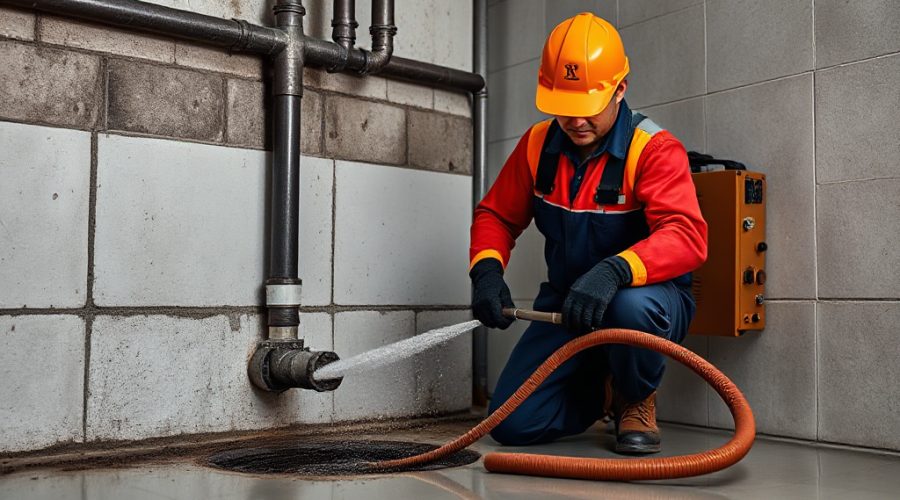
Escalate when the same drain backs up twice within a month, when water rises in more than one fixture, or when you hear gurgling from a drain you are not using. These are signs of a partially blocked main line or a vent problem. A professional desentupidora em Osasco SP will inspect with a camera, hydrojet the line if appropriate, and document the condition for your building records.
Cost is the second reason to escalate early. A small camera inspection and a targeted hydrojet cost far less than excavating a collapsed pipe or replacing a section of floor. The trade-off is straightforward: pay for diagnosis now or pay for demolition later.
What a professional visit typically includes
- Visual inspection of accessible fixtures and cleanouts
- Camera inspection of the main line when the blockage is not local
- Hydrojetting or mechanical clearing based on pipe material
- A written record of the condition and recommended next steps
Ask for the record. In 2026, that document is what protects you with a landlord, insurer, or condominium administrator.
Preventive Habits That Actually Work
Prevention is less about products and more about what enters the pipe. Grease should go into a container, not the sink. Hair should be caught at the strainer. Paper products that do not break down should never enter the toilet.
A quarterly flush with hot water helps move soap residue, but it will not clear grease that has already hardened. The more effective habit is a yearly inspection of the main line, especially in buildings older than twenty years.
Simple maintenance checklist
- Check strainers weekly and clear hair and debris.
- Pour hot water down each drain monthly to move soap film.
- Schedule a camera inspection annually for older properties.
- Keep a written log of any backup, date, and repair.
These steps do not replace professional service, but they reduce the chance that a small issue becomes an emergency call at night.
Comparing DIY and Professional Approaches
The table below summarizes the practical differences for a cautious client deciding what to do next.
| Approach | Best for | Limitation |
|---|---|---|
| Chemical opener | Surface hair and soap scum | Ineffective on grease, roots, and deep blockages |
| Plunger | Local clogs in a single fixture | Can pressurize a main line and cause backups elsewhere |
| Hand snake | Short, accessible clogs | Can damage older pipe materials |
| Professional hydrojetting | Grease, scale, and main-line obstructions | Requires access and a trained operator |
| Camera inspection | Diagnosis and documentation | Does not clear the blockage by itself |
If you have already tried the first three rows and the drain is still slow, the remaining rows are the correct next step.
Frequently Asked Questions
How do I know if the blockage is in my unit or the building main?
Test fixtures one at a time. If only one drain is slow, the clog is local. If several drains react at once, or if a neighbor reports the same problem, the main line is involved and the building administrator should be notified.
Is chemical drain cleaner safe for older pipes?
Repeated use can corrode older metal and soften some plastic joints. It is also ineffective against grease and roots. Use it sparingly and only for surface clogs, and never mix different chemical products.
What information should I have ready when I call a professional?
Note which fixtures are affected, when the problem started, what you already tried, and whether you smell gas. Mention the property age and pipe material if you know it. That information shortens the diagnosis and helps the crew bring the right equipment.
Can a slow drain fix itself?
Rarely. A partial blockage may clear temporarily when water pressure shifts debris, but the cause remains. Treat any recurring slowdown as a sign that the line needs inspection.
Summary: What to Do Next
If your repair attempt failed, the most useful next step is diagnosis, not another product. Confirm whether the blockage is local or in the main line, check for gas smells, and document what you have already tried. Then call a professional service that can inspect with a camera and clear the line without damaging older pipes.
For properties in Osasco, the practical choice is a crew that handles emergency calls, hydrojetting, and preventive maintenance under one record. That combination keeps your repair documented and your building compliant with current expectations.